

Lightweight Wheel Design and Vehicle Energy Use
Lightweight wheel design is one of the key technical routes to energy saving and emission reduction. A wheel is both a rotating component and a core part of unsprung mass, so changes in its weight affect energy consumption far more than equivalent sprung mass — making wheel lightweighting a highly efficient lever for efficiency.
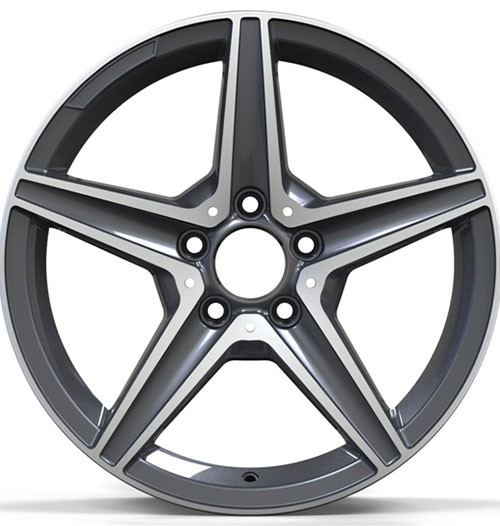
The impact starts with reducing unsprung mass and rotational inertia. Lower unsprung mass means the suspension needs less energy on bumpy roads and tire-road contact stays more stable; during acceleration the drivetrain has less inertia to overcome, and during braking less kinetic energy is dissipated — an optimization especially visible in stop-and-go city driving. Lightweight wheels also help cut rolling resistance: reduced wheel weight lowers load fluctuation at the tire contact patch, indirectly lowering the rolling resistance coefficient, and the savings accumulate steadily during long highway cruising — benefiting both fuel economy and EV range.
There are three main routes to lightweighting: structural optimization (topology optimization and finite-element analysis enabling hollow and thin-wall spoke designs), material upgrades (aluminum alloy replacing cast iron, or magnesium alloy and composites), and process innovation (forging aligns flow lines with load directions and densifies the structure; flow forming refines rim grains and thins walls while raising strength). Of course, lightweighting must be balanced against safety, durability and cost to avoid losses in stiffness or fatigue strength. With aluminum alloy wheels at its core, AUHE Technology keeps searching for the best balance among structure, material and process.

|
|
Site Navigation
|
WeChat Mall

|
Contact Us
|
|
Copyright Anhui AUHE Technology Co., Ltd. All rights reserved |
|
