

Modified Wheel Sizing & Suspension Fitment
Upgrading wheels is not just a styling exercise — it is a systems project involving safety, performance and comfort. Poorly chosen sizes fail to improve performance and can instead upset the factory-tuned balance, even compromising driving safety.
The core matching parameters are wheel diameter, width, offset (ET) and center bore diameter. A larger diameter usually pairs with lower-profile tires, reducing sidewall deflection and sharpening steering response, at some cost in comfort. More importantly, the aspect ratio must be adjusted in step so the total wheel diameter (rim diameter plus twice the sidewall height) stays as close as possible to the OEM specification; a large deviation throws off speedometer and odometer readings and disturbs ABS and stability control systems that rely on wheel-speed signals, potentially causing false alarms.
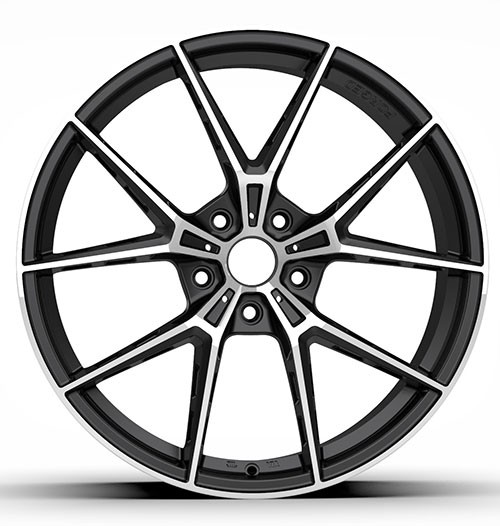
Offset determines where the mounting face sits relative to the rim centerline, directly affecting suspension geometry and steering characteristics; a wrong ET can make tires protrude and rub the fenders or sit too far inboard and interfere with the brakes. Width matters too: an overly wide rim deforms the tread, changing wear patterns and grip. For owners planning to upgrade to forged wheels or flow-formed wheels, confirm the factory data first, then adjust step by step according to your needs. AUHE Technology reminds you that proper sizing should be built on professional measurement — never chase big diameters blindly.

|
|
Site Navigation
|
WeChat Mall

|
Contact Us
|
|
Copyright Anhui AUHE Technology Co., Ltd. All rights reserved |
|
