

Forged Wheels: Performance and Manufacturing
Forged wheels represent the state of the art in wheel manufacturing, and their performance comes from a unique metalworking process. Unlike ordinary cast wheels, forging uses ten-thousand-ton-class hydraulic presses to apply enormous pressure to solid aluminum billets, producing a dense molecular structure. This physical deformation eliminates the porosity and inclusions common in casting, giving the finished wheel a much higher strength-to-weight ratio. Test data show that at the same size, a forged wheel is over 30% stronger than a cast one while weighing about 20% less.
Manufacturing begins with aerospace-grade 6061 or 7075 aluminum billets. Heated to 400-500℃, the billet is placed in a die and formed under instantaneous pressure of 8,000 to 10,000 tons; after hot forging, T6 heat treatment — solution strengthening plus artificial aging — further refines the grains. In finishing, five-axis CNC machines mill every surface to 0.1 mm accuracy, enabling complex spoke designs that conventional casting cannot achieve.
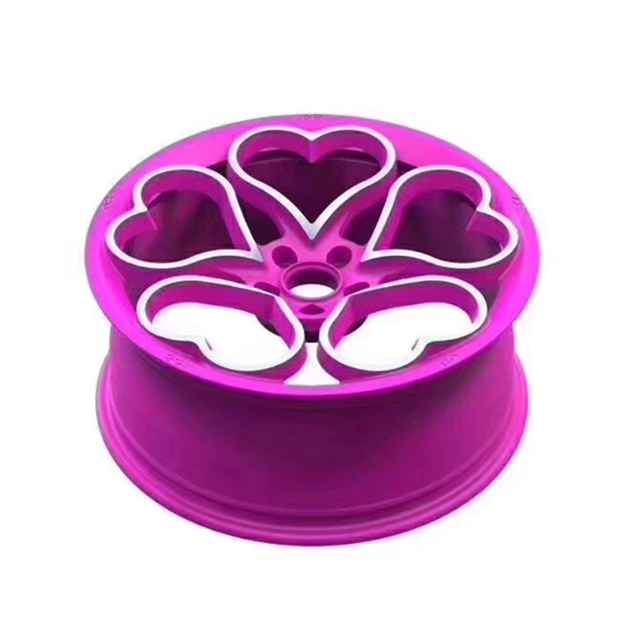
The performance advantages stand out under demanding conditions. Forged wheels withstand greater lateral stress and resist deformation and fracture during track driving or on rough roads, and their superb fatigue resistance gives them 2-3 times the service life of cast wheels. Although they cost roughly 3-5 times as much, the investment meaningfully raises a vehicle’s dynamic limits for performance enthusiasts and professional teams. With newer processes such as flow forming improving productivity, forged wheels are gradually moving from the track to the street. AUHE Technology’s automotive wheel lineup also covers forging, giving owners with different needs more choices.

|
|
Site Navigation
|
WeChat Mall

|
Contact Us
|
|
Copyright Anhui AUHE Technology Co., Ltd. All rights reserved |
|
